back to work
2022 / case study

Horbie.

An audiobook platform designed for kids to love and parents to trust.

UI Design UX Design Branding
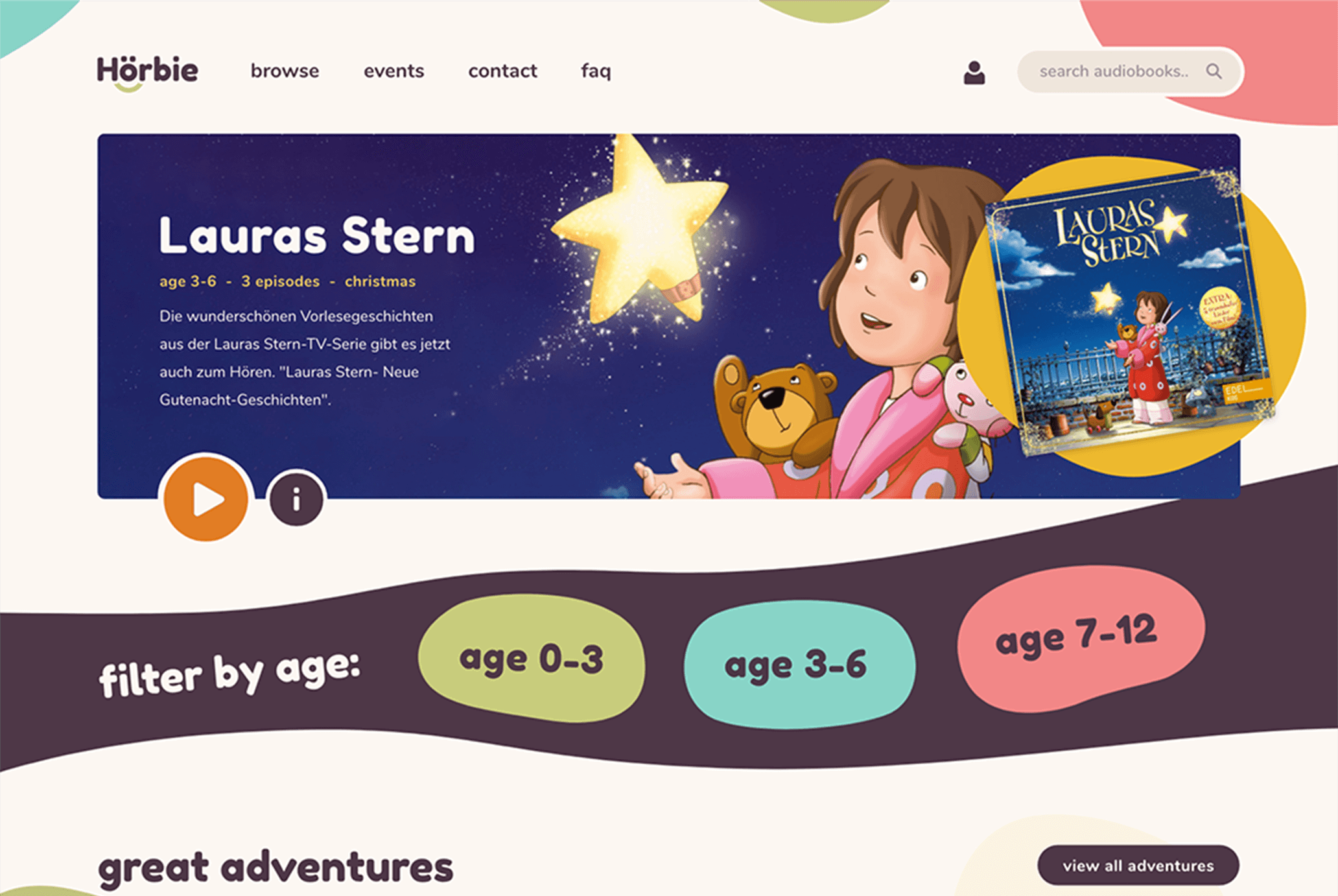
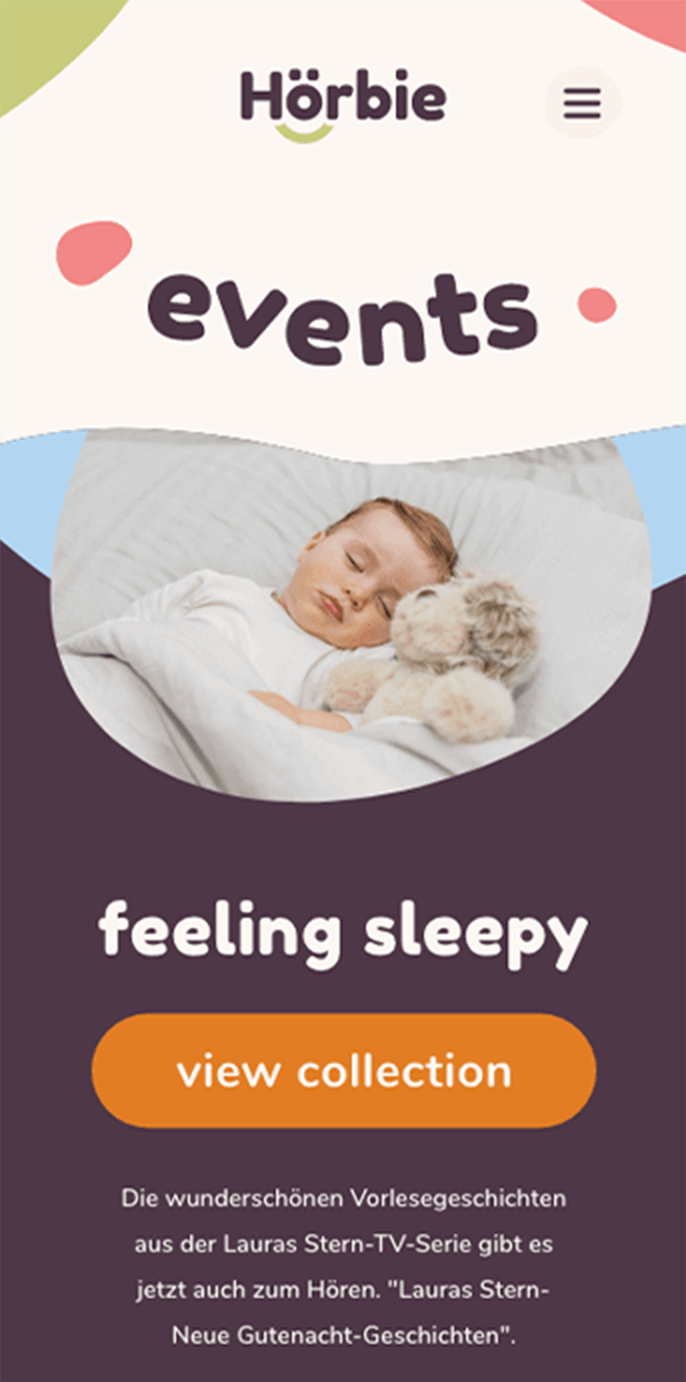
Horbie across desktop and mobile

warm enough for kids, clean enough for parents.

Horbie is an audiobook platform for kids and the parents who manage what they listen to. Two audiences, one product. Warmth in the design to keep kids engaged, restraint in the parent-facing layer to earn parents' trust.

YEAR
2022
ROLE
UI Design · UX Design · Branding
TEAM
Solo
STACK
Adobe XD prototype
LAUNCH
Pre-launch · 2022
STATUS
Archived

the problem.

Horbie is an audiobook platform for kids, but kids aren't the ones browsing for what to play. Parents are. The product had to be warm enough that a child wants to use it and clean enough that a parent trusts it on their device. Both audiences, in the same interface, at the same time.

kid-friendly often means cluttered trust-signals often kill warmth designed for one user, not both buyer is not the listener

the process.

Designing for two audiences inside one product: the kid on the screen, the parent on the buy.

01
Listen for both audiences
Talked to parents about how they choose what their kids listen to, and watched how kids actually engage with audiobooks. The decision-maker isn't the listener, but the listener shapes what the decision-maker eventually picks. Both perspectives had to show up in the design.
02
Design the kid layer for warmth
Warm colour palette, friendly typography, generous spacing, large tap targets. Big-hero illustrations and clear voice tags so a non-reader can still navigate. The kid layer had to feel like a place a child wants to be, not a junior version of an adult product.
03
Design the parent layer for trust
Settings, content browsing, and the recommendations all read adult-calm. No dark patterns, no autoplay-next that traps a parent, no buttons positioned to catch an accidental tap. A parent should feel confident handing the device over and getting it back.
04
Hold both layers in one system
Type scale, colour system, illustration style: built to flex from a kid's home screen to a parent's overview without changing tone. One brand, two postures.
05
Prototype and hand it off
High-fidelity Adobe XD prototype with both layers fully thought through: the kid's listening journey and the parent's oversight. Delivered as a complete identity and flow set ready to build.

for the kid and the parent, in the same interface.

Horbie shipped as a complete pre-launch design: identity, prototype, and flows for both the kid and the parent. The product didn't end up launching, but the design holds up as a study in building for two audiences inside one product.

Designed for both audiences, not just the one choosing
The kid who listens and the parent who decides, both designed in.
Warmth for the kid, restraint for the parent, in one system
One design that flexes from kid-warmth to parent-calm without changing tone.
Delivered the full dual-audience design in Adobe XD
Identity, prototype, and flows for both layers, ready to build in 2022.
designing for two audiences

The first audience question for an audiobook platform looks easy: it's for kids. The harder question is who chooses, who manages, and who hands the device over. Horbie taught me to design for both at once, instead of treating one as primary and the other as accessibility.

Most products for kids end up designed for kids alone, with a separate parental-controls page bolted on at the end. Horbie asked the opposite: what if the parent and the kid both feel like the product is for them? The kid layer stays warm and friendly. The parent layer stays calm and free of dark patterns. Both inside the same product. The discipline carries, even though Horbie didn't launch.

next case

Marie Cécile Thijs.

A photography portfolio designed to put the work before the design.

read case